
Secure cycle locker configurator: review how each compartment is accessed and used
Individual cycle lockers create a different product discussion from open racks. The customer needs to understand the compartment arrangement, the door movement and what the storage interior contains.
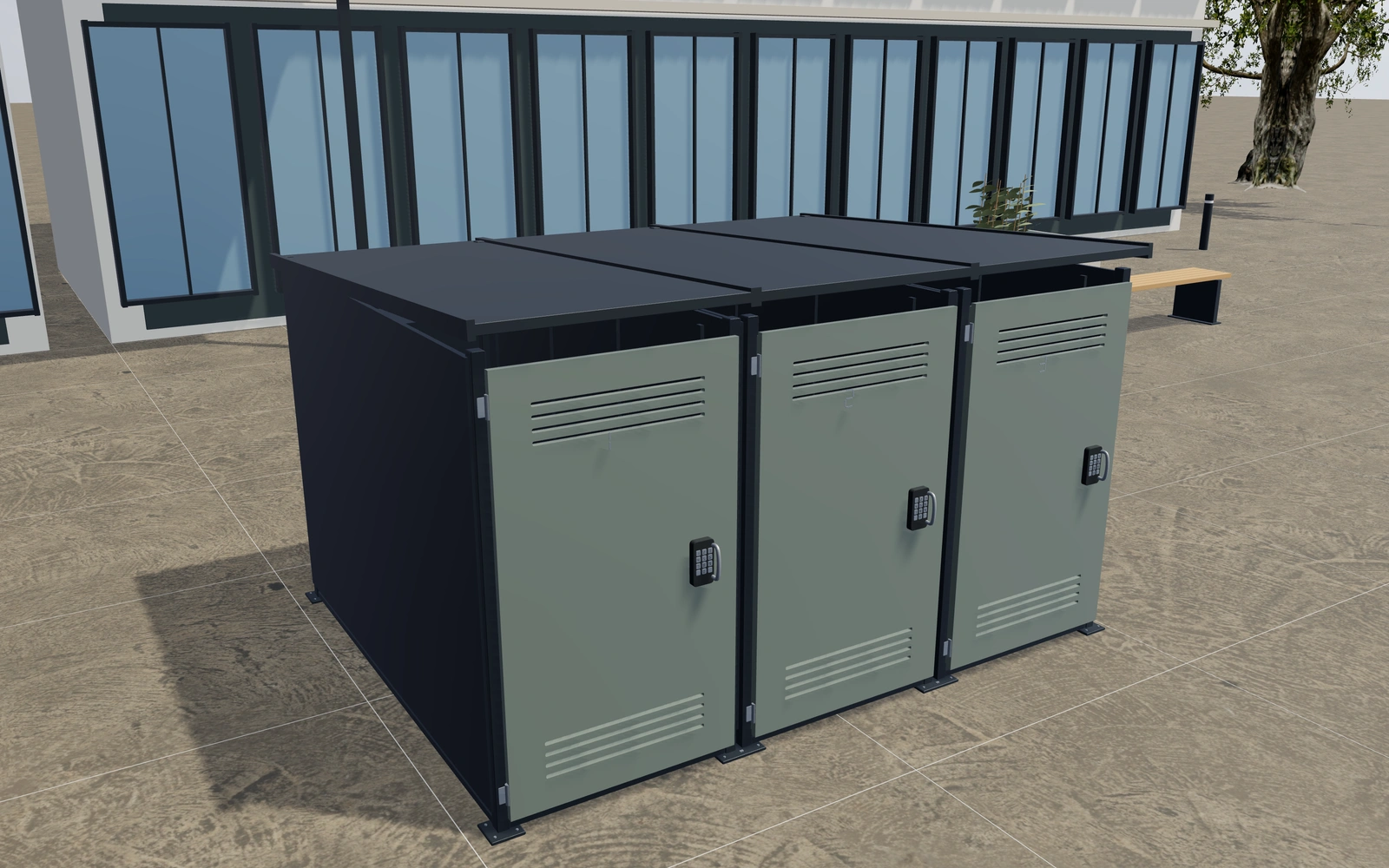
Review how each compartment is accessed and used
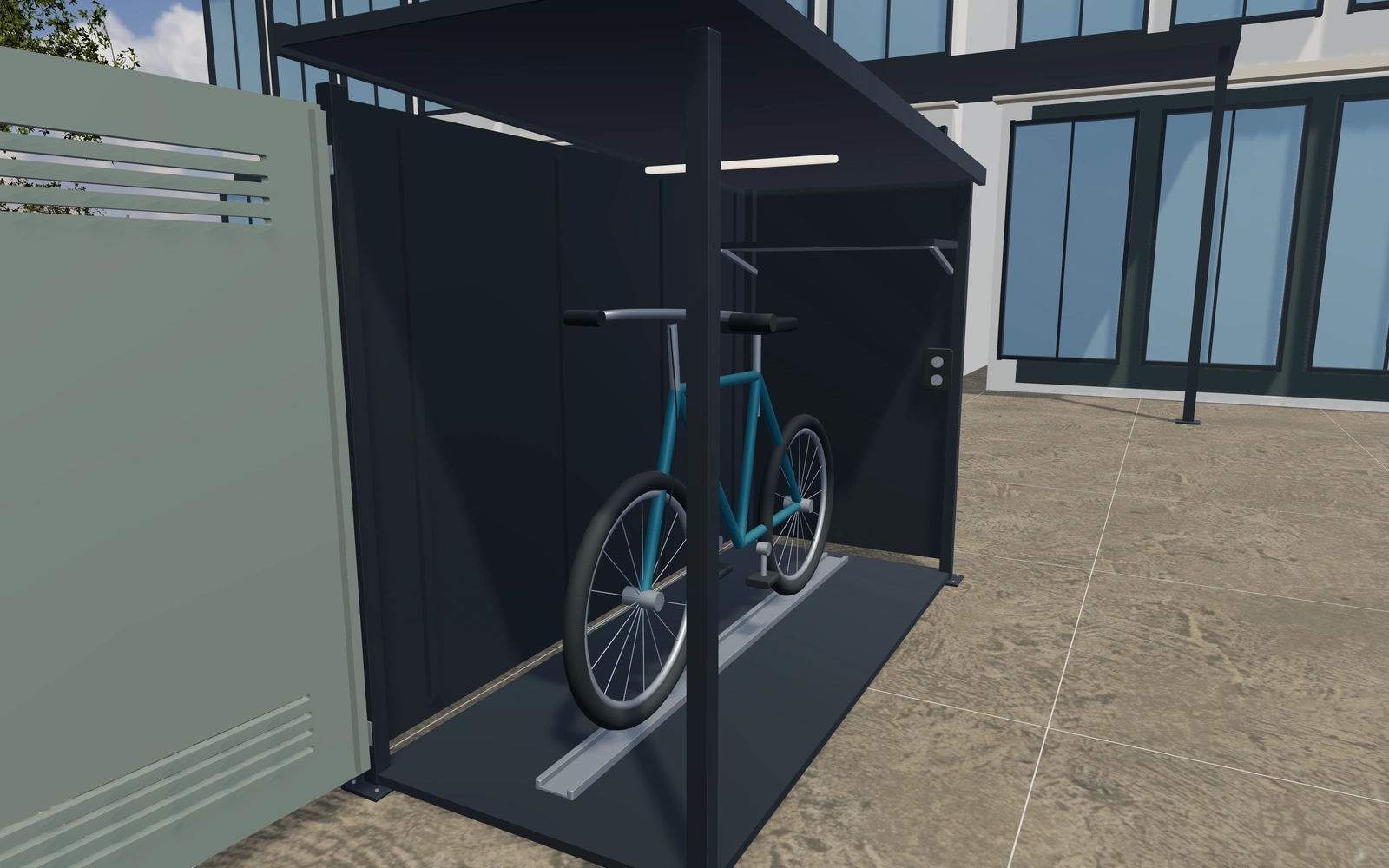
Compare the available door styles with the proposed location. Inspect wheel channels, shelves and the selected compartment’s interior using the cutaway view. If socket housings are included visually, record the customer’s electrical requirements rather than assuming that the model establishes a complete charging installation.
Side-hinged doors or lift-up access?
Compare the open positions against the proposed location before selecting the frontage material. Wheel channels and interior shelves also affect use. A socket housing is an equipment reference, so electrical provision and any charging requirement should remain distinct from the storage layout.
Test the open door against the intended storage approach
Side-hinged and lift-up doors should be reviewed in use, not only as closed fronts. Compare the wheel channel and interior fittings with the actual bicycle brief. A locker can look compact outside while still requiring an approach that the site has not reserved.
Ventilated steel, timber slats and perforated cassettes are different frontage preferences. Keep those separate from key cylinders, keypad references or padlock-ready hardware. Record electrical and access-control requirements independently rather than assuming that a visible socket or keypad means an installed connected service.
Secure cycle lockers options to compare
Review the selected model before refining individual details. Available choices can change with the model and earlier selections; the groups below describe the current starting configuration.
Dimensions
- Clear width per locker
- 800–1200 mm in the current model
- Locker depth
- 1900–2600 mm in the current model
- Front body height
- 1350–1900 mm in the current model
Roof
- Roof form
- Flat folded cap
- Rear-draining slope
Doors
- Door surface
- Ventilated folded steel
- Timber slats on a metal frame
- Perforated metal cassette
- Ventilation slot spacing
- 30–60 mm in the current model
Finishes
- Body and frame finish
- Anthracite
- Warm white
- Sage
- Brushed metal
- Door metal finish
- Anthracite
- Warm white
- Sage
- Brushed metal
Access
- Door operation
- Side-hinged door
- Top-hinged lift door
- Lock hardware appearance
- Key cylinder
- Keypad and pull
- Padlock-ready hasp
Signage
- Permanent compartment numbers
- Include or omit
Interior
- Floor wheel channel
- Include or omit
- Rear helmet shelf
- Include or omit
- Internal socket and cable housing
- Include or omit
- Selected locker light strip
- Include or omit
Base
- Floor anchoring hardware
- Include or omit
Dimension ranges describe the current model controls. Confirm the selected product, final measurements and supplied specification with the manufacturer.
Worked example: a customer brief for secure cycle lockers
For an apartment cycle store, save the preferred door arrangement and inspect one compartment’s interior. Record actual bicycle dimensions and the operating requirements. Identify compartments and fittings on the proposal, with locking, electrical provision and access integration reviewed separately.
From secure cycle lockers choices to a clear proposal
List the compartment and fitting arrangement on the proposal. Lock hardware, electrical provision and any access-control integration need confirmation for the actual supplied system. Keep those requirements with the project so a change to the locker frontage does not obscure the operational discussion.
Questions for your secure cycle lockers review
- Compartment count
- Door movement
- Interior fittings
- Access and electrical requirements
Useful views for the secure cycle lockers review
Use these inspection views to discuss the arrangement and visible details before approving the specification.
- Interior cutaway, wheel channel and fittings
- Door hinges, lock and ventilation
Secure cycle lockers configurator FAQs
Can the inside of a selected locker be inspected?
Yes. An interior cutaway reveals the compartment and fittings without requiring the customer to infer the storage space from the closed front.
What should the customer measure for a cycle locker enquiry?
Retain the actual bicycle dimensions and the space available to open and use the chosen door. Review the wheel channel and interior fittings. List locking and electrical requirements separately so the storage model is not mistaken for a complete access-control or charging installation.
Put the choices
in the same view.
Explore the secure cycle lockers configurator, review the available product options and discuss your own range with our team.