
Recycling station configurator: specify each collection stream instead of counting doors
A recycling station is easier to quote when every collection stream has a clear purpose. The configurator should connect the intake aperture, label and service arrangement rather than treating the product as a row of identical bins.
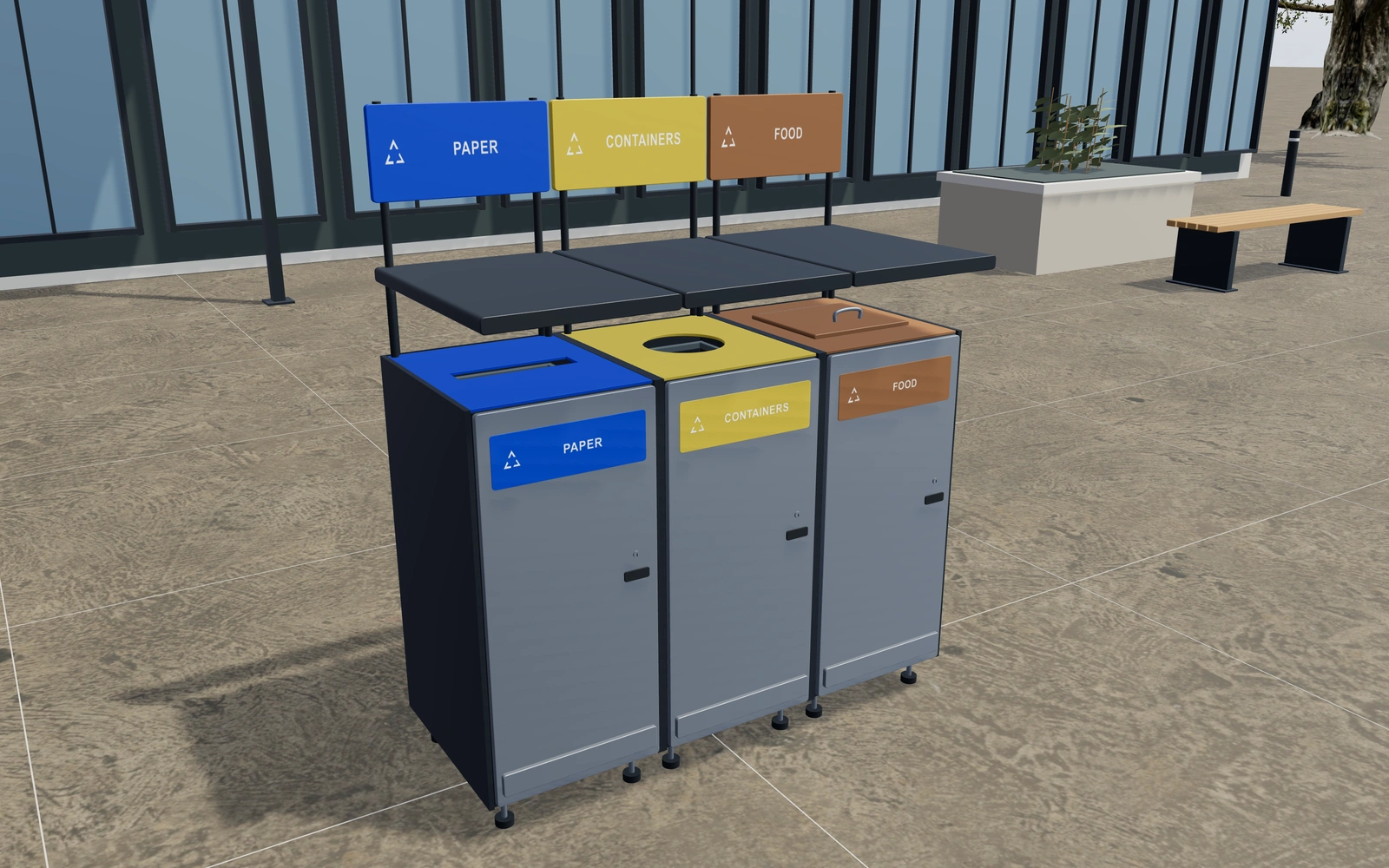
Specify each collection stream instead of counting doors
Choose the number and mix of streams, then inspect their openings and inner liners. Compare the selected hood, base and metal finishes while keeping labels easy to identify. Open the service doors to discuss how the operator will remove material and maintain the station.
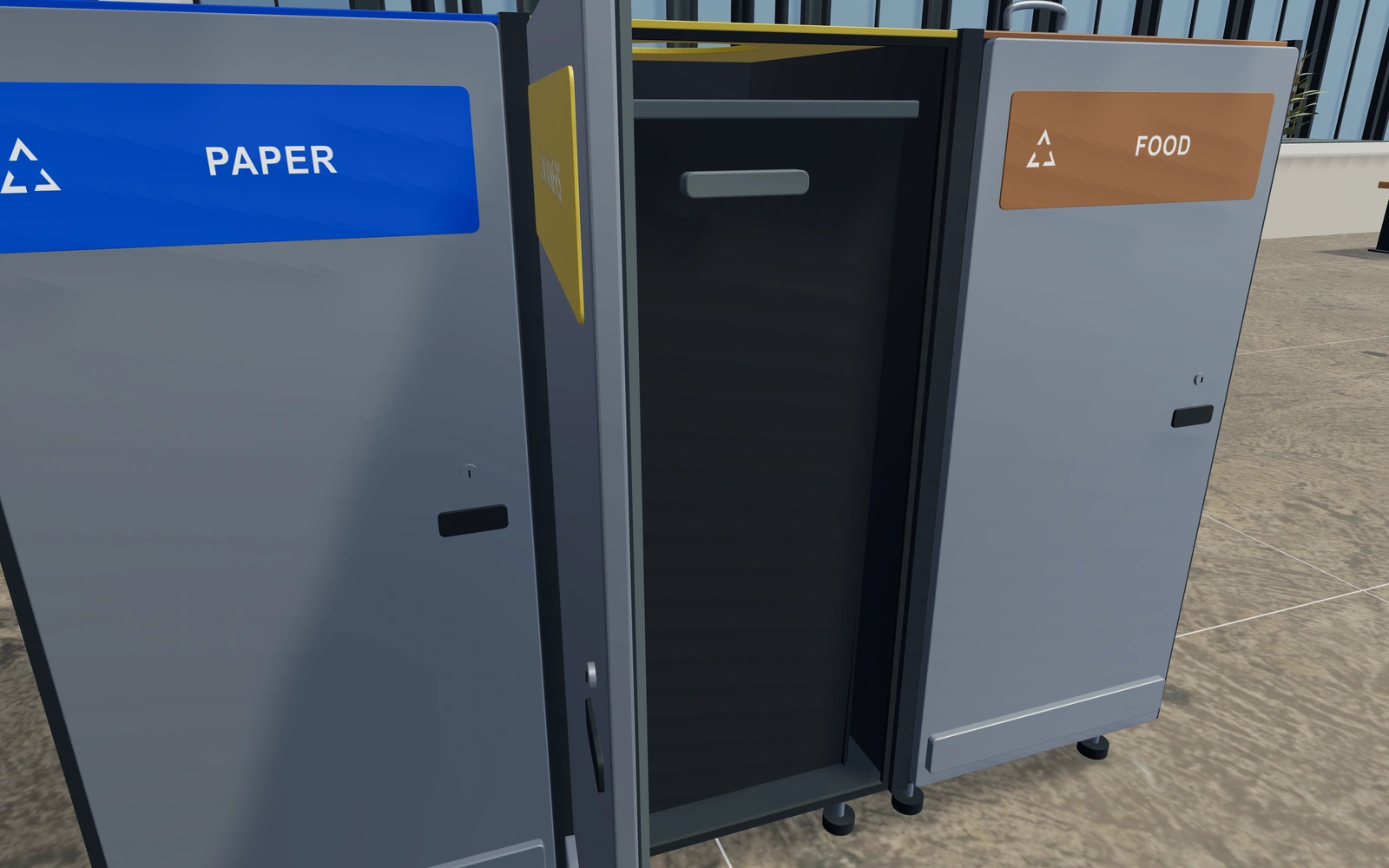
More collection streams or a better matched stream mix?
Adding another compartment is useful only if it supports the site’s waste process. Compare intake shapes, labels and liners for the selected streams. Open the service doors to understand how the station will be emptied before refining hood and metal finishes.
Build the stream schedule before the cabinet palette
Paper, mixed recycling, bottles and food-waste references describe different collection intentions. Assign the streams first, then compare tailored apertures, circular openings and rounded rectangles. The operator’s actual accepted materials should decide the labels rather than a convenient visual colour combination.
Review service doors and the selected base arrangement from the emptying side. Bright and muted stream identifiers can be compared without altering the stream schedule. Retain liner and signage requirements individually so the customer can understand the station’s operating brief as well as its exterior appearance.
Recycling stations options to compare
Review the selected model before refining individual details. Available choices can change with the model and earlier selections; the groups below describe the current starting configuration.
Layout
- Collection streams
- 1–5 in the current model
Dimensions
- Module width
- 340–600 mm in the current model
- Station depth
- 420–700 mm in the current model
- Main body height
- 850–1200 mm in the current model
Streams
- Stream 1
- Paper and card
- Mixed recycling
- Containers and bottles
- Glass bottles
- Food waste
- Residual waste
- Stream 2
- Paper and card
- Mixed recycling
- Containers and bottles
- Glass bottles
- Food waste
- Residual waste
- Stream 3
- Paper and card
- Mixed recycling
- Containers and bottles
- Glass bottles
- Food waste
- Residual waste
Finishes
- Body finish
- Anthracite
- Warm white
- Sage green
- Brushed stainless
- Service door finish
- Anthracite
- Warm white
- Brushed stainless
- Deep blue
- Stream-colour palette
- Clear bright identifiers
- Muted architectural identifiers
Intakes
- Intake geometry
- Aperture tailored to each stream
- Circular openings
- Open rounded rectangles
- Hinged food-waste cover
- Include or omit
Weather
- Protective raised hood
- Include or omit
- Clear height under hood
- 120–260 mm in the current model
- Hood front overhang
- 40–160 mm in the current model
Signage
- Stream identification backboard
- Include or omit
- Signboard support extension
- 280–500 mm in the current model
- Front stream labels
- Include or omit
Base
- Base construction
- Adjustable anchored feet
- Continuous recessed plinth
- Lockable castors
Hardware
- Protective stainless kick strip
- Include or omit
- Service-door lock cylinders
- Include or omit
- Door perimeter seals
- Include or omit
Interior
- Rigid removable inner bins
- Include or omit
- Liner bag-retaining rims
- Include or omit
Dimension ranges describe the current model controls. Confirm the selected product, final measurements and supplied specification with the manufacturer.
Worked example: a customer brief for recycling stations
For an office collection point, save the agreed stream mix and record the signage wording. Review liner removal and the approach for servicing. The proposal can identify each stream and accessory while the operator confirms the actual collection process and accepted materials.
From recycling stations choices to a clear proposal
Carry the stream mix into the proposal using recognisable names. Confirm the site’s actual waste process, container requirements and any signage content separately. The saved view helps explain the arrangement but does not establish that a chosen stream accepts every item shown in a generic recycling message.
Questions for your recycling stations review
- Stream mix
- Intake apertures
- Liner removal
- Agreed signage content
Useful views for the recycling stations review
Use these inspection views to discuss the arrangement and visible details before approving the specification.
- Open service door and liner
- Intake detail with hood hidden
Recycling stations configurator FAQs
Can intake apertures differ between streams?
Yes. Stream-specific intake choices are part of the model. Confirm the final signage and accepted material categories with the site operator.
What should be agreed before adding another recycling stream?
Confirm what the operator collects and how each compartment will be emptied. Match the intake, label and liner to that process. Keep signage wording with the station specification so the customer approves a usable collection arrangement rather than only a longer cabinet.
Put the choices
in the same view.
Explore the recycling stations configurator, review the available product options and discuss your own range with our team.