
Mobile fume-extraction unit configurator: compare arm reach with filter-service access
A mobile extraction unit has two distinct spatial needs: where the hood is positioned and where the equipment is serviced. A useful configurator helps the customer review both instead of judging the product by its cabinet size alone.
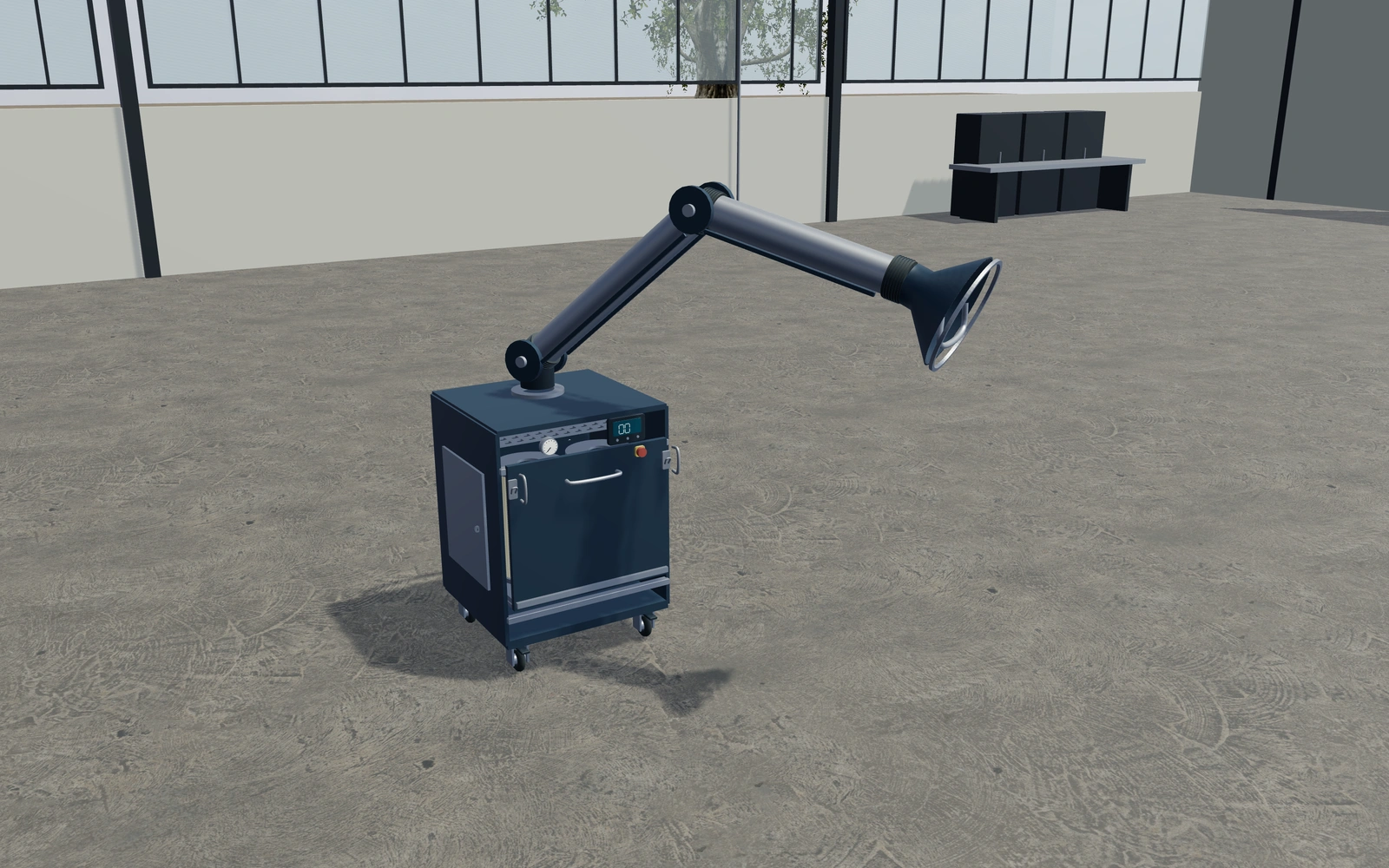
Compare arm reach with filter-service access
Move the selected arm through its available positions and compare the hood angle with the intended work area. Inspect the service drawer and cartridge arrangement, then consider where the unit will stand and be moved. Keep the customer’s process and access requirements in the project notes.
One arm or two arms?
Compare hood positions and the unit’s location before selecting the cartridge package. Arm reach and filter-service access are different spatial questions. More visible arms or cartridges should not be presented as proof of higher protection without the actual equipment and process assessment.
Compare arm reach with the actual work positions
A one-arm and two-arm arrangement should be reviewed against where the real tasks occur. Keep hood positions and operator routes in the same discussion. An arm extended toward a reference workpiece explains its visual reach but does not demonstrate effective capture.
Record the selected unit, arms and fittings separately from any required ducting or site work. Retain the actual process and extraction requirements for specialist assessment. The supplied performance and installation specification should support the equipment choice rather than be inferred from the hood’s appearance.
Mobile fume-extraction unit options to compare
Review the selected model before refining individual details. Available choices can change with the model and earlier selections; the groups below describe the current starting configuration.
Dimensions
- Cabinet width
- 650–1100 mm in the current model
- Cabinet depth
- 650–950 mm in the current model
- Cabinet body height
- 800–1200 mm in the current model
Arms
- Combined arm length
- 1500–2800 mm in the current model
- Arm tube appearance
- Rigid metal tube with joint cuffs
- Corrugated tube appearance
- Capture-hood form
- Flared open hood
- Round open bellmouth
Filters
- Filter cartridge appearance
- Pleated cartridge
- Fine-mesh cylindrical reference
Hardware
- Drawer retaining latches
- Include or omit
- Rear handling rail
- Include or omit
Accessories
- Cable storage loop
- Include or omit
Base
- Castor wheel diameter
- 100–160 mm in the current model
Materials
- Cabinet accent finish
- Deep blue
- Sage green
- Warm ochre
- Warm white
- Anthracite
- Metal tube finish
- Brushed stainless appearance
- Polished stainless appearance
Controls
- Control-panel appearance
- Display and tactile keys
- Push-button reference panel
Dimension ranges describe the current model controls. Confirm the selected product, final measurements and supplied specification with the manufacturer.
Worked example: a customer brief for mobile fume-extraction unit
For a fabrication station, save the preferred arm arrangement and record the intended work area. Inspect the service drawer, then identify the selected equipment package on the proposal. Keep the process and filtration requirements with the project for qualified review.
From mobile fume-extraction unit choices to a clear proposal
Describe the chosen arm and equipment package on the proposal. Actual capture needs, filtration suitability and exposure-control performance require qualified supplier and workplace review. The visual arm movement is a layout aid, not a test of extraction effectiveness.
Questions for your mobile fume-extraction unit review
- Working hood position
- Arm arrangement
- Filter-service access
- Qualified process review
Useful views for the mobile fume-extraction unit review
Use these inspection views to discuss the arrangement and visible details before approving the specification.
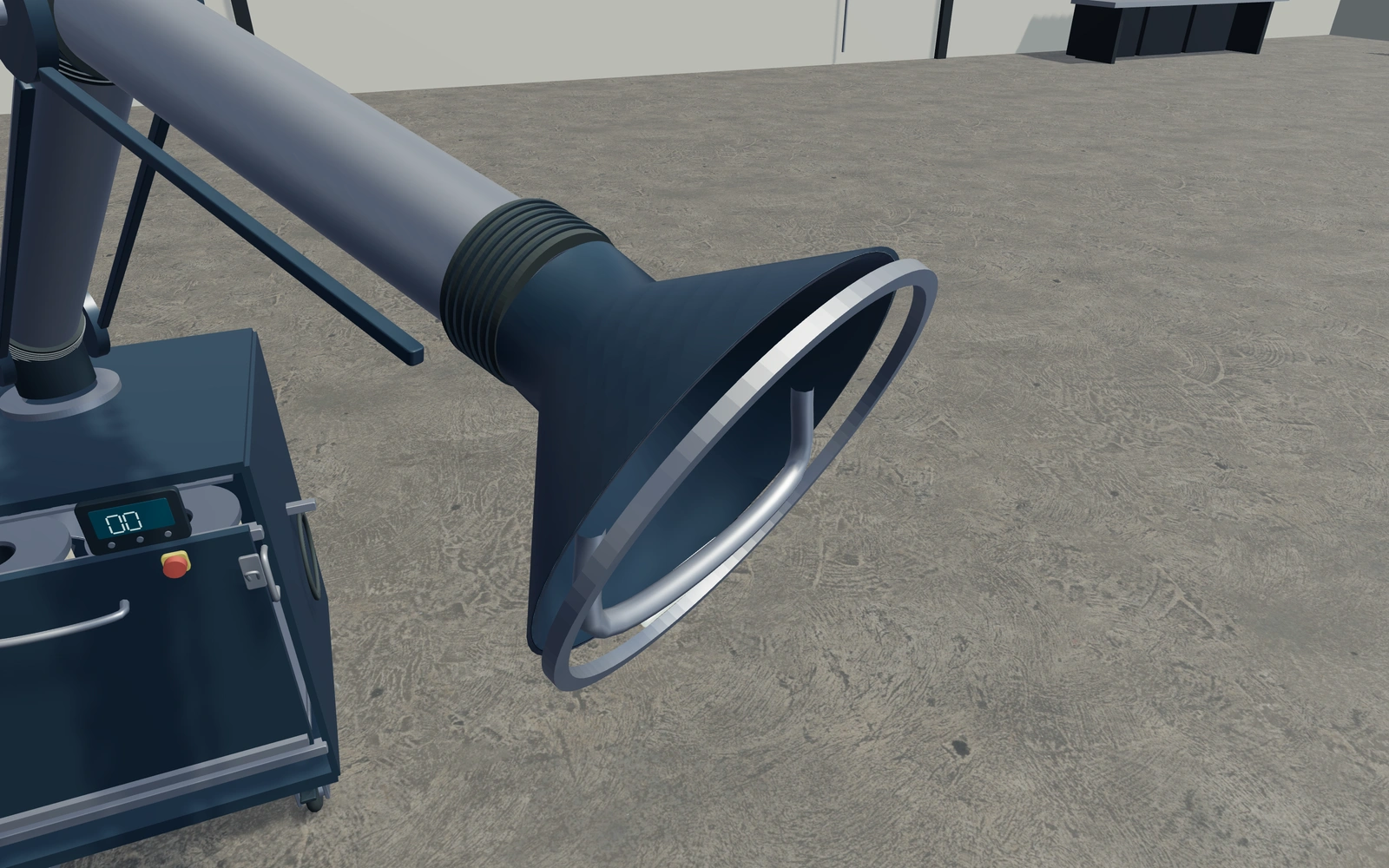
- Open capture hood and articulated fittings
- Pleated cartridge and service drawer
- Shoulder, elbow and supporting links
Mobile fume-extraction unit configurator FAQs
Does the hood’s visual position prove effective capture?
No. Capture and filtration requirements depend on the actual process, equipment and workplace assessment.
What should be reviewed before adding a second extraction arm?
Discuss where the actual work occurs and the movement needed around it. Review the arm and hood positions against the operator route. Keep the required extraction performance and installation assessment separate from the visual number of arms or their displayed reach.
Put the choices
in the same view.
Explore the mobile fume-extraction unit configurator, review the available product options and discuss your own range with our team.