
Commercial in-vessel composter configurator: plan the service route around the vessel
An in-vessel composter configuration should make the equipment’s relationship with the collection and service area understandable. The customer needs to discuss how material arrives and how the equipment is accessed, not only its enclosure size.
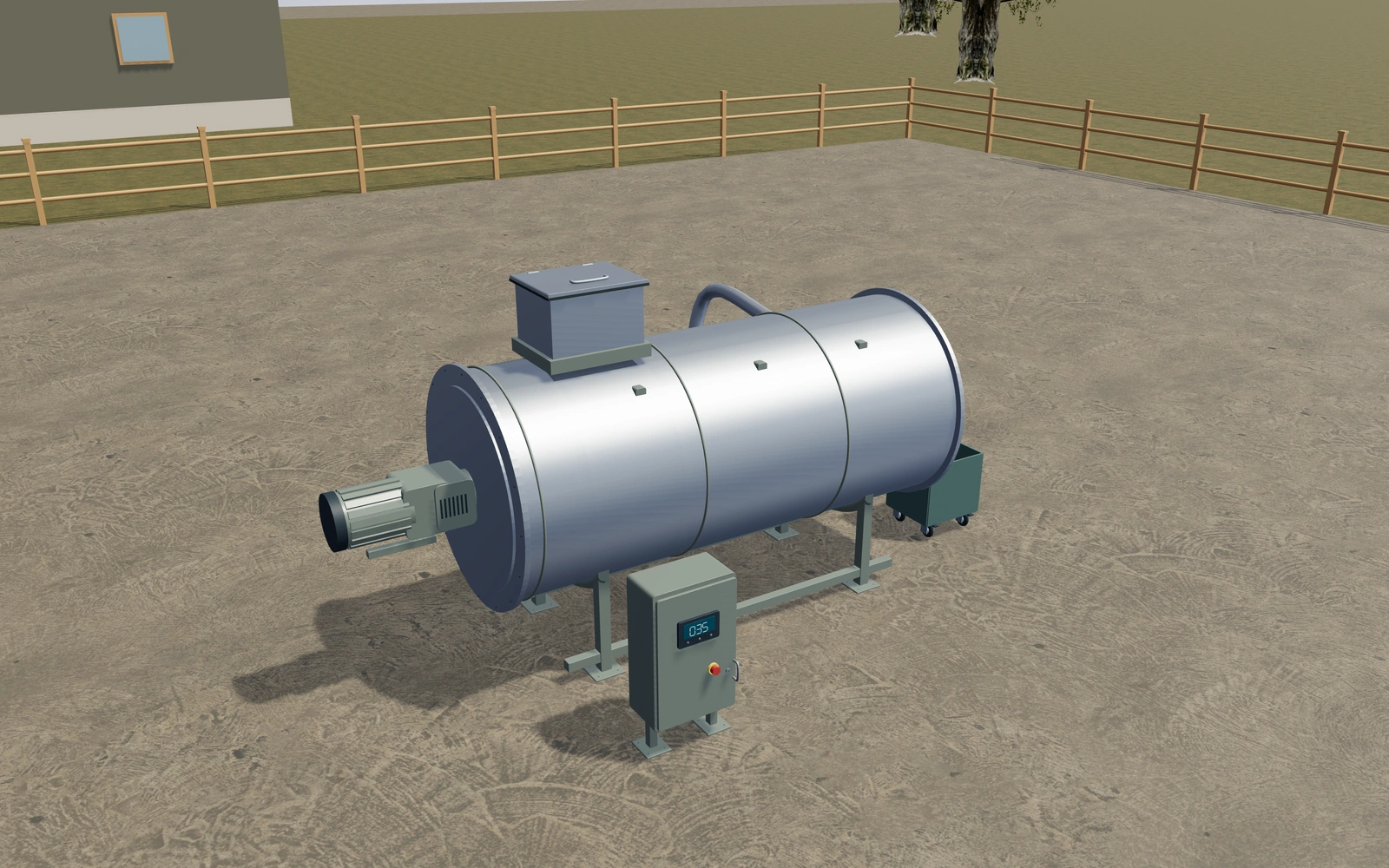
Plan the service route around the vessel
Compare the selected vessel arrangement from the loading and service sides. Ask where incoming material, handling equipment and any output collection will be located. Record the customer’s material stream and operating process separately from the visual finish preference.
Vessel arrangement or material-handling layout?
Compare the loading and service sides with the incoming material route visible. A vessel count or exterior size does not describe the operator’s whole process. Record the actual material stream and handling method before discussing finishes or equipment accessories.
Read the feed, vessel and discharge as a connected layout
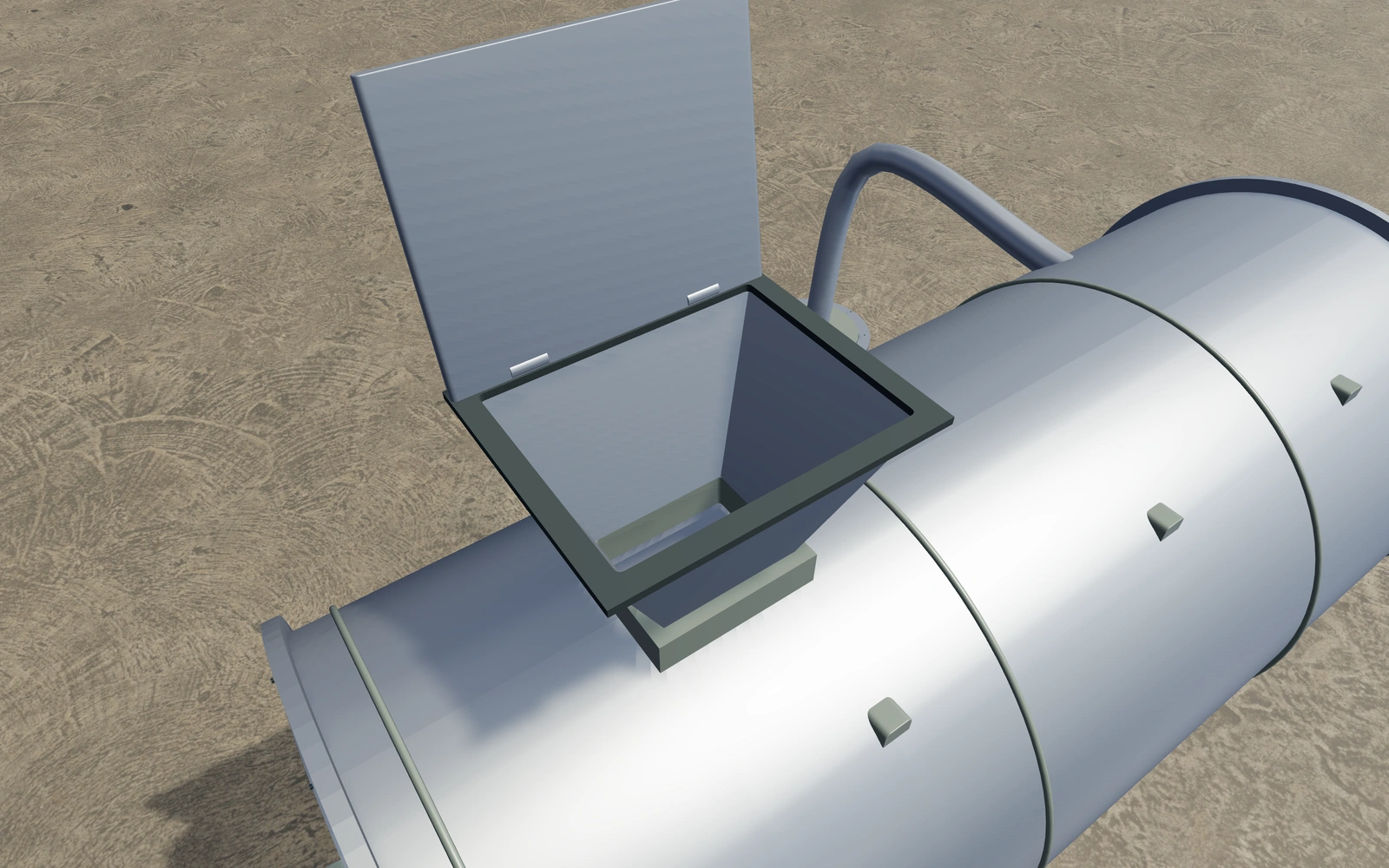
Square-flanged and tapered hoppers create different feed appearances. Paddles and helical-ribbon references can be inspected inside the vessel, but that view explains arrangement rather than process performance. Compare equipment positions with the incoming and outgoing material routes recorded.
Connection-only exhaust, a canister and a separate filter box should remain distinct scope references. Keep supporting equipment and treatment requirements identifiable in the proposal. The supplier needs the actual material and process brief to establish the complete system beyond the selected stainless and frame finishes.
Commercial in-vessel composters options to compare
Review the selected model before refining individual details. Available choices can change with the model and earlier selections; the groups below describe the current starting configuration.
Dimensions
- Process vessel length
- 2400–4200 mm in the current model
- Process vessel diameter
- 1000–1600 mm in the current model
- Vessel bottom above ground
- 450–700 mm in the current model
Materials
- Vessel surface
- Brushed stainless
- Satin stainless
- Support and cover finish
- Sage
- Anthracite
- Warm white
Loading
- Loading hopper arrangement
- Square flanged hopper
- Tapered feed hopper
- Hopper loading width
- 450–800 mm in the current model
Vessel
- Shaft paddles
- Pitched mixing paddles
- Helical ribbon appearance
- Outer insulated jacket
- Include or omit
- Temperature sensor housings
- Include or omit
Air handling
- Air manifold and blower
- Include or omit
- Exhaust treatment appearance
- Connection only
- Carbon-filter canister
- Separate media-filter box
Discharge
- Discharge collection
- No collection unit
- Wheeled receiving bin
- Extended stainless chute
Controls
- Freestanding control cabinet
- Include or omit
Safety details
- Drive protective cover
- Include or omit
Dimension ranges describe the current model controls. Confirm the selected product, final measurements and supplied specification with the manufacturer.
Worked example: a customer brief for commercial in-vessel composters
For a workplace organics project, save the preferred arrangement and note input collection and output handling. Quote the selected equipment separately from site and service works, with throughput and accepted materials confirmed by the supplier.
From commercial in-vessel composters choices to a clear proposal
Keep the agreed equipment layout with the proposal, then obtain actual throughput, material acceptance and installation requirements from the supplier. A visual model is not a process-performance calculation. Separating the layout from those operating requirements makes the purchasing discussion more specific and easier to review.
Questions for your commercial in-vessel composters review
- Material-handling route
- Loading and service sides
- Operating process
- Supplier capacity information
Useful views for the commercial in-vessel composters review
Use these inspection views to discuss the arrangement and visible details before approving the specification.
- Loading hopper, seal and hinge
- Drive motor, gearbox and shaft
- Discharge hatch and collection
Commercial in-vessel composters configurator FAQs
Does the model demonstrate composting performance?
No. The visual layout explains equipment relationships. Actual process results, accepted feedstocks and operating capacity need the supplied system’s information.
What should be recorded around the composter vessel?
Describe incoming material handling, discharge and the service route alongside the selected vessel arrangement. Keep any conveyors or support equipment identifiable. Ask the supplier to establish actual process suitability and performance instead of deriving throughput from the size of the visual model.
Put the choices
in the same view.
Explore the commercial in-vessel composters configurator, review the available product options and discuss your own range with our team.