
Ev charging bay configurator: separate the equipment layout from the electrical design
An EV charging-bay configurator can help customers compare the arrangement of equipment, markings and protection. It should give the installer a clear visual brief without implying that the electrical design is already complete.
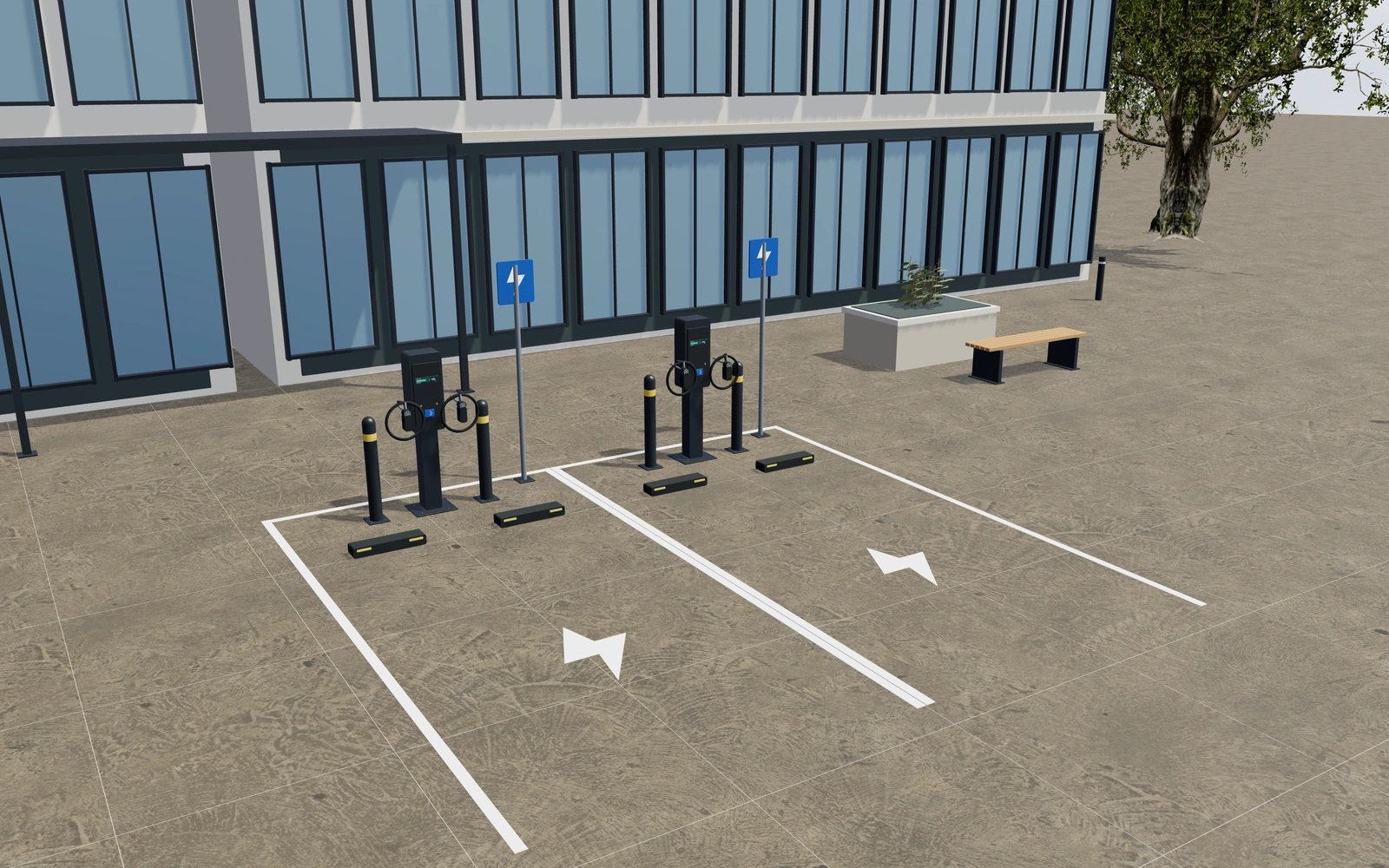
Separate the equipment layout from the electrical design
Review the number of bays and connector positions with the vehicle approach in view. Compare compact and cabinet-style housings, cable arrangements and any canopy preference. Keep bollards, wheel stops and signs visible so the customer can discuss the whole charging area.
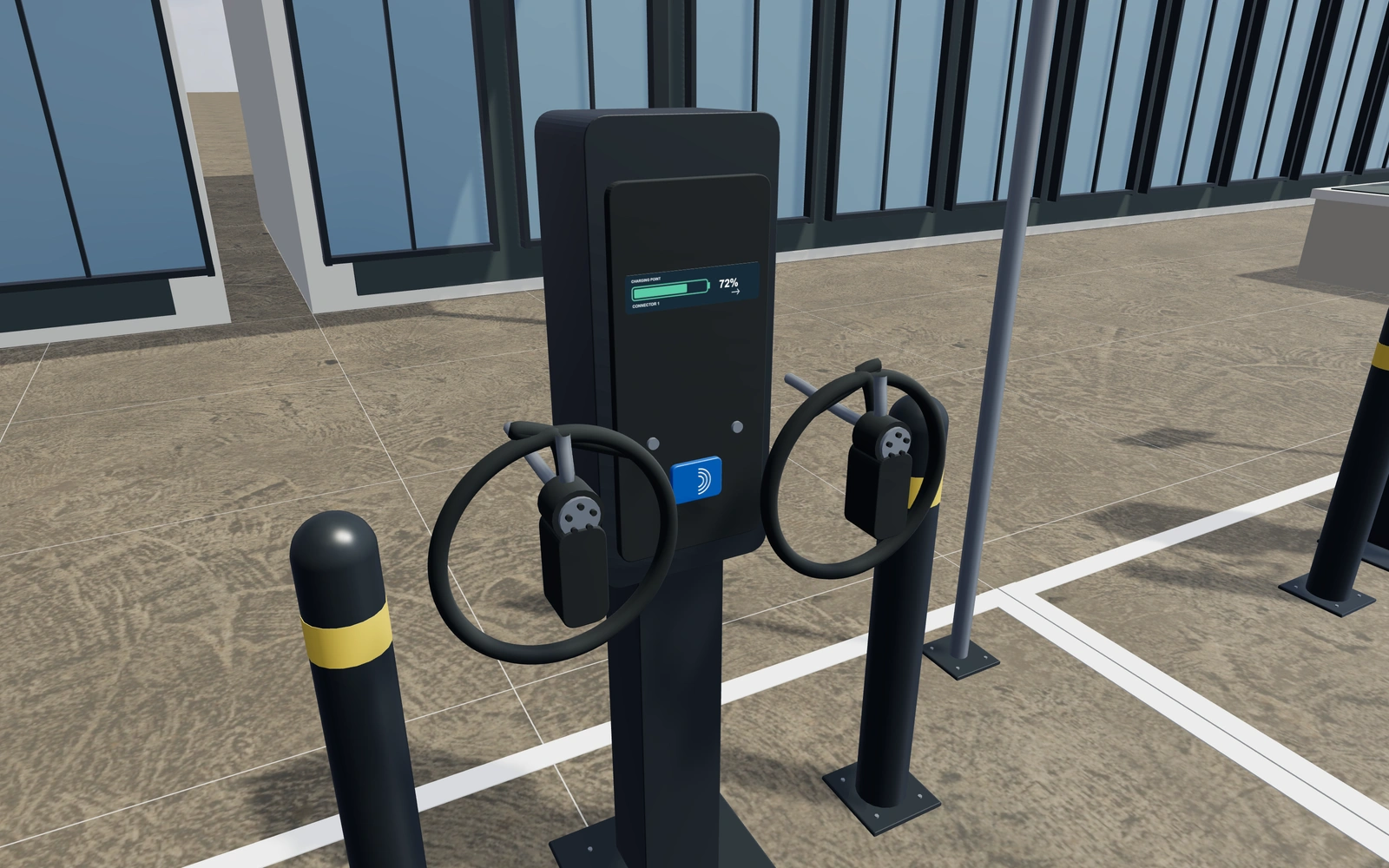
Compact equipment or cabinet-style housings?
Compare connector positions and cable arrangements with the vehicle approach visible. A canopy, wheel stop or bollard changes the overall site composition and should remain identifiable in the proposal. Electrical capacity and connection design are separate from the equipment’s rendered shape or display.
Keep parking layout separate from electrical equipment claims
Compact AC-style pedestals and larger DC-style cabinets communicate different equipment appearances. Compare the selected connector arrangement, markings and protective elements against the bay approach. The appearance of a charging cabinet does not specify the available supply, charging speed or payment system.
Coordinate canopy and equipment finishes after the circulation brief is agreed. If a solar canopy reference is included, list it separately from the charging hardware. Keep the actual electrical design, grid connection and service integration as explicit requirements for the responsible suppliers.
EV charging bays options to compare
Review the selected model before refining individual details. Available choices can change with the model and earlier selections; the groups below describe the current starting configuration.
Layout
- Charging bays
- 1–4 in the current model
Dimensions
- Parking bay width
- 2400–3600 mm in the current model
- Parking bay depth
- 4800–6500 mm in the current model
Equipment
- Charging hardware appearance
- Compact AC-style pedestal
- Larger DC-style cabinet
- Equipment overall height
- 1300–1850 mm in the current model
- Outlet arrangement
- One connector per bay
- Two connectors per bay
- Displayed cable length
- 3000–6000 mm in the current model
- Equipment display and controls
- Include or omit
- RFID reader appearance
- Include or omit
Finishes
- Equipment and canopy finish
- Anthracite
- Warm white
- Sage
- Brushed metal
- Display and side accent
- Electric blue
- Green
- Warm white
Site details
- Parking-bay markings
- Include or omit
- Marking colour
- White
- Blue
Protection
- Paired wheel stops
- Include or omit
- Charger-protection bollards
- Include or omit
- Bollard height
- 700–1100 mm in the current model
Signage
- Charging point sign
- Include or omit
Canopy
- Weather canopy
- Include or omit
Dimension ranges describe the current model controls. Confirm the selected product, final measurements and supplied specification with the manufacturer.
Worked example: a customer brief for ev charging bays
For a business car park, save two equipment-layout preferences using the same bay brief. Record cable positions and protection preferences. Quote the selected equipment references separately from the electrical installation, with the responsible specialist confirming power, protection and grid requirements.
From ev charging bays choices to a clear proposal
Describe the selected equipment appearance and site layout on the proposal. Charging capacity, grid connection, protection and installation requirements need qualified electrical review and supplier documentation. A solar-module canopy appearance is also distinct from an engineered photovoltaic installation and should be identified that way in the project notes.
Questions for your ev charging bays review
- Bay arrangement
- Connector and cable positions
- Equipment protection
- Qualified electrical review
Useful views for the ev charging bays review
Use these inspection views to discuss the arrangement and visible details before approving the specification.
- Display, connectors and cable management
- Bollards, wheel stops and base fixings
EV charging bays configurator FAQs
Does a solar-module canopy establish photovoltaic output?
No. It is a visual equipment reference. An actual PV installation needs its own module specification, structural and electrical design, and site review.
What belongs in an EV bay proposal beyond the equipment image?
Identify the selected housings, protection and any canopy, then list electrical supply and charging integration separately. Retain the actual bay layout and circulation brief. A visual equipment combination does not establish charging power, grid capacity or a working payment service.
Put the choices
in the same view.
Explore the ev charging bays configurator, review the available product options and discuss your own range with our team.