
Bin-store enclosure configurator: test the collection route before choosing the frontage
A bin-store enclosure has to support both everyday disposal and the collection process. The configurator should make the doors, feeding covers and reference bins understandable as one service arrangement.
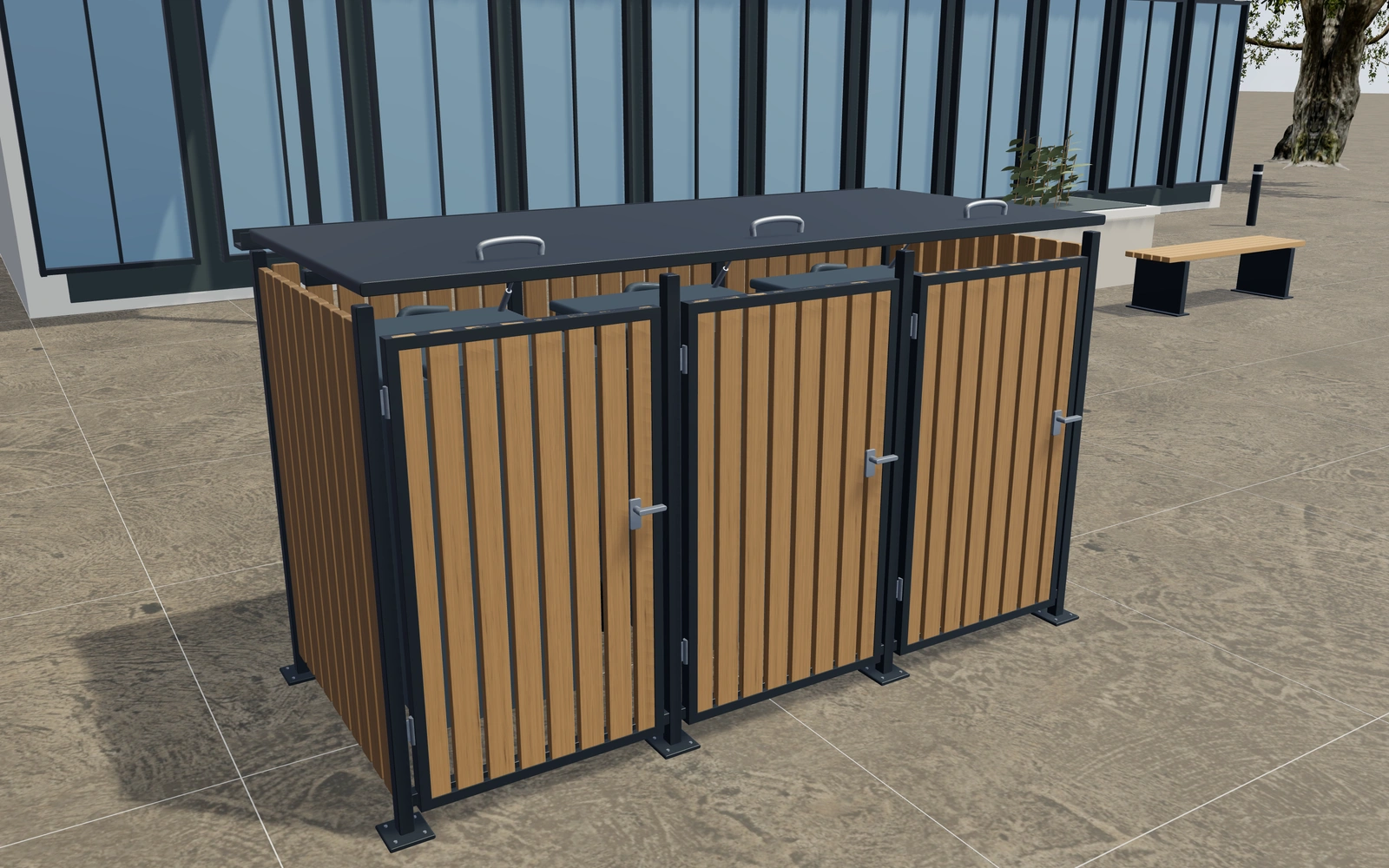
Test the collection route before choosing the frontage
Compare the number of screened bays against the intended bins. Open the service doors and review the top feeding access from the user’s approach. Look at timber, louvered or perforated fronts only after the customer understands how the selected arrangement will be used.
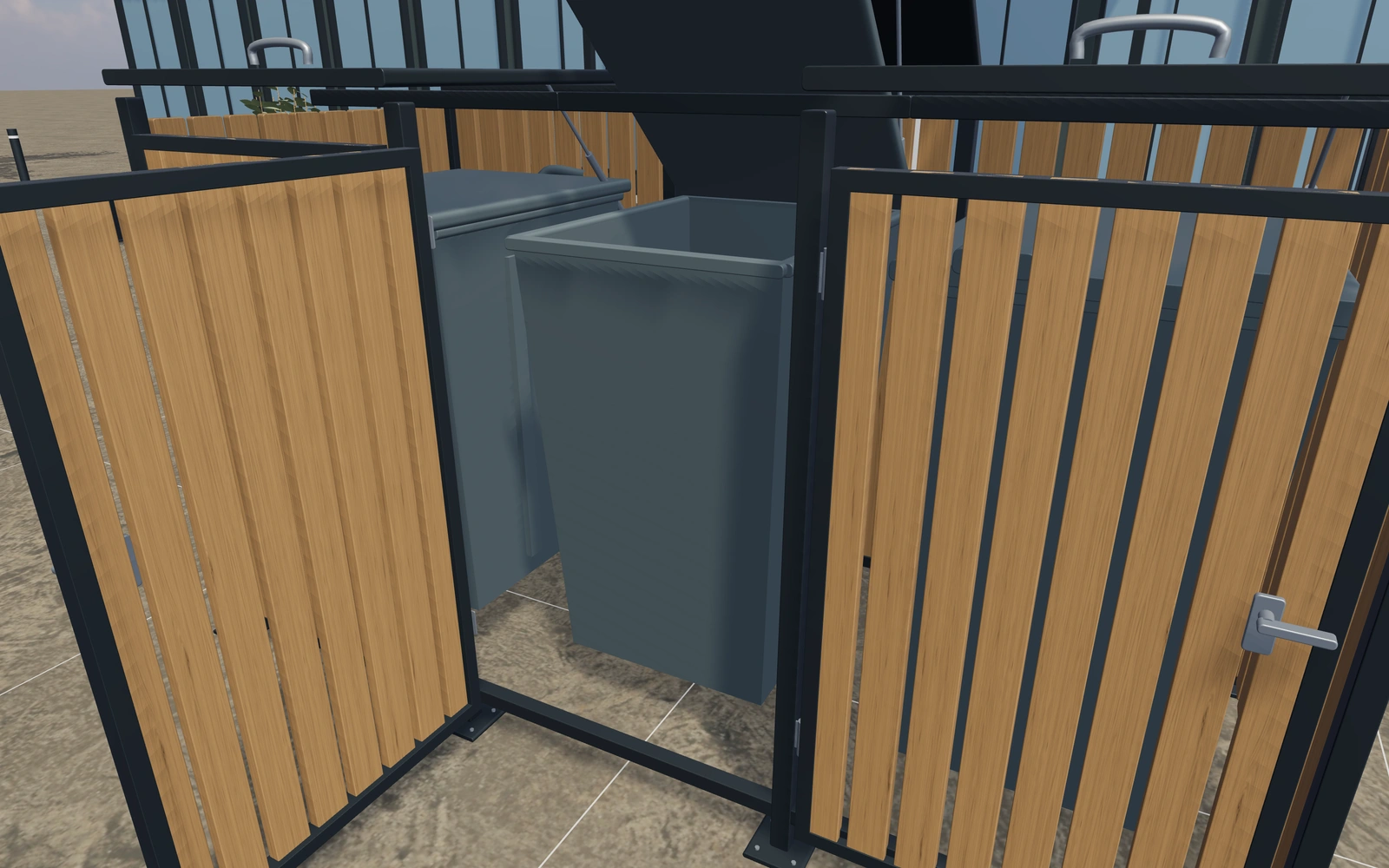
Single service doors or paired doors?
Compare the open access against the actual bins and collection process. Top feeding covers serve a different task from the doors used for removal. Timber, louvered and perforated fronts can be reviewed after the customer understands the selected access arrangement.
Distinguish feeding access from container removal
The front doors serve the removal route, while top feeding covers address a different task. Compare single and paired doors with the actual bins in mind. Retain the service approach before choosing timber boards, metal louvers or perforated panels for the screen.
Keep board and metal finishes separate from reference-bin colours. Record latch, cylinder or hasp preferences as hardware choices. The proposal should identify the enclosure package, base work and collection-route requirements so a visually tidy bin store does not conceal an unresolved handling arrangement.
Bin-store enclosures options to compare
Review the selected model before refining individual details. Available choices can change with the model and earlier selections; the groups below describe the current starting configuration.
Layout
- Bin compartments
- 1–5 in the current model
Dimensions
- Clear width per compartment
- 700–1000 mm in the current model
- Compartment depth
- 850–1200 mm in the current model
- Enclosure height
- 1250–1650 mm in the current model
Cladding
- Screen material
- Vertical timber boards
- Horizontal metal louvres
- Perforated metal panels
- Board or louvre gap
- 10–35 mm in the current model
Finishes
- Board finish
- Natural oak
- Dark timber
- Thermally treated ash
- Metal finish
- Anthracite
- Warm white
- Sage
- Brushed metal
Doors
- Front access
- Single hinged doors
- Paired hinged doors
- Front door hardware
- Lever latch
- Key cylinder and pull
- Padlock-ready hasp
Roof
- Linked feeding covers
- Include or omit
- Feeding cover finish
- Folded metal
- Matching timber boards
- Feeding cover pulls
- Include or omit
Drainage
- Rear rain channel and outlet
- Include or omit
Dimension ranges describe the current model controls. Confirm the selected product, final measurements and supplied specification with the manufacturer.
Worked example: a customer brief for bin-store enclosures
For a shared bin area, save the preferred bay arrangement and record the actual container sizes. Inspect feeding and removal separately. List the enclosure, doors and covers in the proposal, with base work and any collection-route changes identifiable as site items.
From bin-store enclosures choices to a clear proposal
Record the enclosure layout and finish alongside the actual bin dimensions and collection requirements. The reference containers help explain scale, but final compatibility depends on the bins supplied to the site. The proposal should distinguish the enclosure equipment from any base preparation or collection-route alterations.
Questions for your bin-store enclosures review
- Reference bin sizes
- Service-door opening
- Feeding access
- Collection route
Useful views for the bin-store enclosures review
Use these inspection views to discuss the arrangement and visible details before approving the specification.
- Doors, bin wheels and feeding lids
- Timber, hinge and lid support hardware
Bin-store enclosures configurator FAQs
Can reference-bin dimensions replace container measurements?
No. Confirm the bins actually used by the operator. Reference containers support the visual discussion, not a guarantee of compatibility with every bin.
What should I inspect with the removal doors open?
Check the route used to take the actual containers out, including the selected door arrangement and nearby obstructions. Review feeding covers separately. Keep the base and collection-route requirements in the proposal rather than assuming they are supplied with the enclosure.
Put the choices
in the same view.
Explore the bin-store enclosures configurator, review the available product options and discuss your own range with our team.