
Compact compost trommel screen configurator: follow the material route through the equipment layout
A trommel-screen configuration should help the buyer understand how the feed, screen and discharge areas relate. The useful sales brief follows the material route rather than concentrating only on the drum’s appearance.
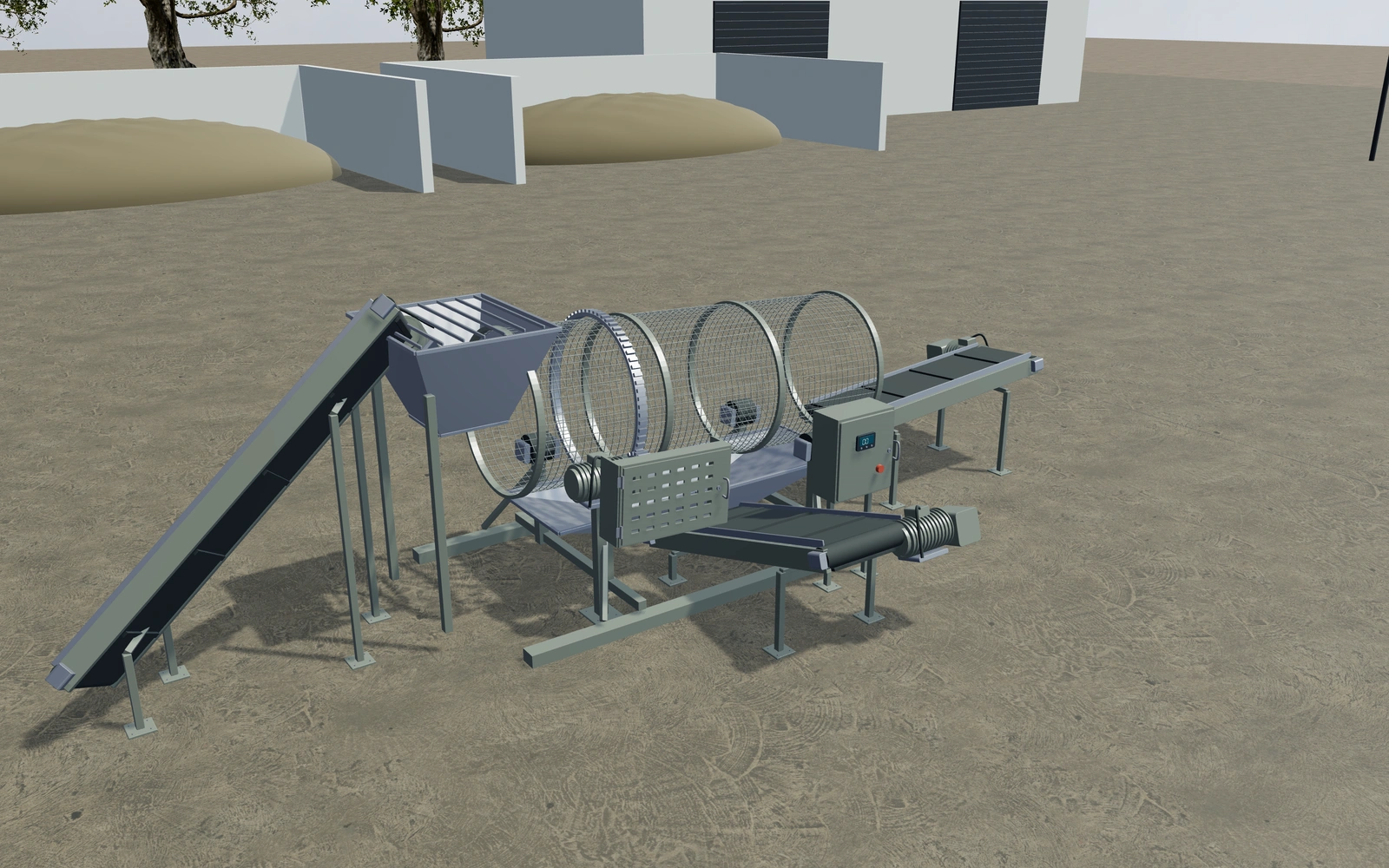
Follow the material route through the equipment layout
Compare the selected screen and conveyor arrangement from above and from the service side. Inspect the rollers, mesh and collection positions. Ask where incoming material and separated output will be handled so those spaces remain part of the customer’s site discussion.
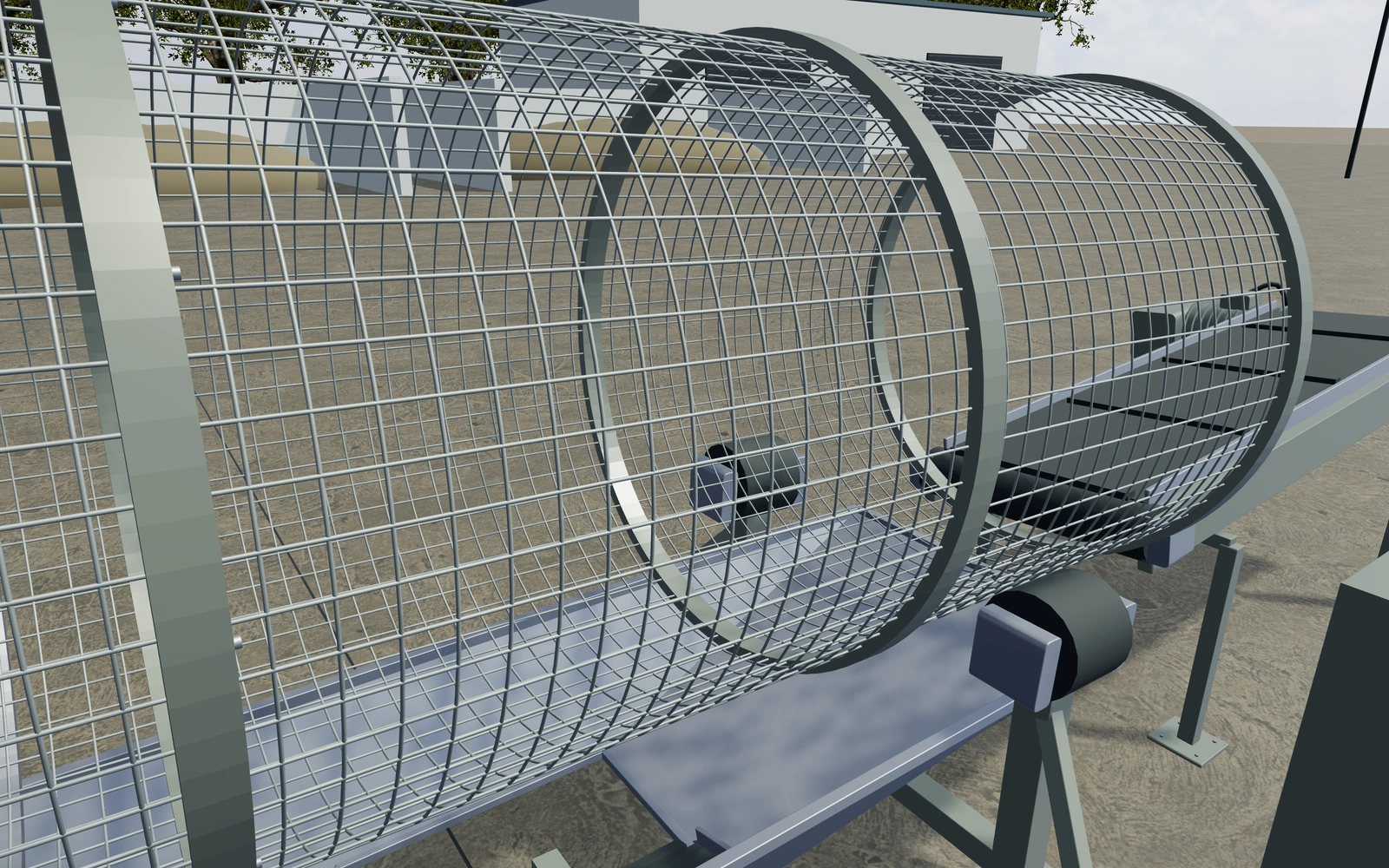
A different screen arrangement or a better discharge layout?
Follow the material path from feed to separated outputs while comparing the selected drum and conveyors. A detailed mesh view is useful for discussing the equipment, but it does not predict how a feedstock will separate. Keep handling and servicing space visible around the model.
Follow material from the feed to the discharge
Compare the selected screen and supporting equipment with both ends of the process visible. The feed arrangement and discharge route deserve separate views because a front image can hide one of them. Retain the actual material-handling brief before refining the equipment finish.
Drum rotation and inspection states explain the visible assembly rather than demonstrate screening performance. Keep the supplied screen, support and handling equipment identifiable in the proposal. Ask the supplier to establish actual capacity and process suitability from the customer’s material and operating requirements.
Compact compost trommel screens options to compare
Review the selected model before refining individual details. Available choices can change with the model and earlier selections; the groups below describe the current starting configuration.
Dimensions
- Working drum length
- 1800–3600 mm in the current model
- Nominal screen diameter
- 700–1300 mm in the current model
- Drum axis inclination
- 0–8 ° in the current model
Screen
- Clear welded-mesh opening
- 20–70 mm in the current model
- Screen wire diameter
- 3–8 mm in the current model
Materials
- Screen material appearance
- Galvanized steel appearance
- Stainless appearance
- Support-frame finish
- Anthracite
- Deep blue
- Warm white
- Sage green
- Brushed metal
Base
- Frame base
- Continuous skid rails
- Individual adjustable feet
Feed
- Feed hopper
- Include or omit
- Feed hopper mouth width
- 700–1400 mm in the current model
- Hopper coarse grating
- Include or omit
Conveyors
- Inclined feed conveyor
- Include or omit
- Feed conveyor horizontal reach
- 1200–2600 mm in the current model
- Side fines conveyor
- Include or omit
- Fines conveyor projection
- 1200–3000 mm in the current model
- Fines discharge height
- 400–1100 mm in the current model
- Oversize discharge conveyor
- Include or omit
- Oversize conveyor horizontal reach
- 1200–2600 mm in the current model
Drive
- Drive mounting side
- Front side
- Rear side
- Motor package appearance
- Compact geared motor
- Larger finned motor
- Drive-service guard
- Include or omit
Hardware
- Electrical service cabinet
- Include or omit
Accessories
- Rear service walkway and rail
- Include or omit
Dimension ranges describe the current model controls. Confirm the selected product, final measurements and supplied specification with the manufacturer.
Worked example: a customer brief for compact compost trommel screens
For a screening enquiry, save the preferred layout and identify input and collection positions. List the equipment and supports in the proposal, with material suitability, throughput and required separation results confirmed by the supplier.
From compact compost trommel screens choices to a clear proposal
Describe the selected equipment arrangement and supports on the proposal. Throughput, separation results, material suitability and operating requirements need supplier confirmation. The visual model supports layout comparison but does not demonstrate how a particular feedstock will perform in the actual machine.
Questions for your compact compost trommel screens review
- Feed and output positions
- Conveyor arrangement
- Service-side access
- Supplier process information
Useful views for the compact compost trommel screens review
Use these inspection views to discuss the arrangement and visible details before approving the specification.
- Screen opening, wire intersections and segment rings
- Support roller, gearbox and service guard
- Belt, roller and collection chute
Compact compost trommel screens configurator FAQs
Does rotating the visual drum demonstrate throughput?
No. The movement explains component relationships. Actual capacity and separation performance need supplier data for the intended material.
Which service views matter for a trommel enquiry?
Inspect the feed, rotating drum enclosure and discharge route together. Record the material-handling brief and available site access. Keep the selected screen and support equipment explicit while the supplier determines actual process capacity and suitability.
Put the choices
in the same view.
Explore the compact compost trommel screens configurator, review the available product options and discuss your own range with our team.